keywords: neuron prefix myelin
There is a prefix that has colonised the study of human difference so thoroughly that we have stopped noticing it is a choice. Neuro. Neuroscience. Neurodivergent. Neurotypical. Neuroplasticity. Neuroeconomics. Neuroleadership. Neuromarketing. Neuroeducation. The prefix promises to ground fuzzy human phenomena in the hard substrate of brain biology, and it has delivered that promise so successfully that an entire generation of clinicians, educators, researchers, parents and patients has organised its understanding of human difference around it.
The problem is that the prefix points at the wrong tissue.
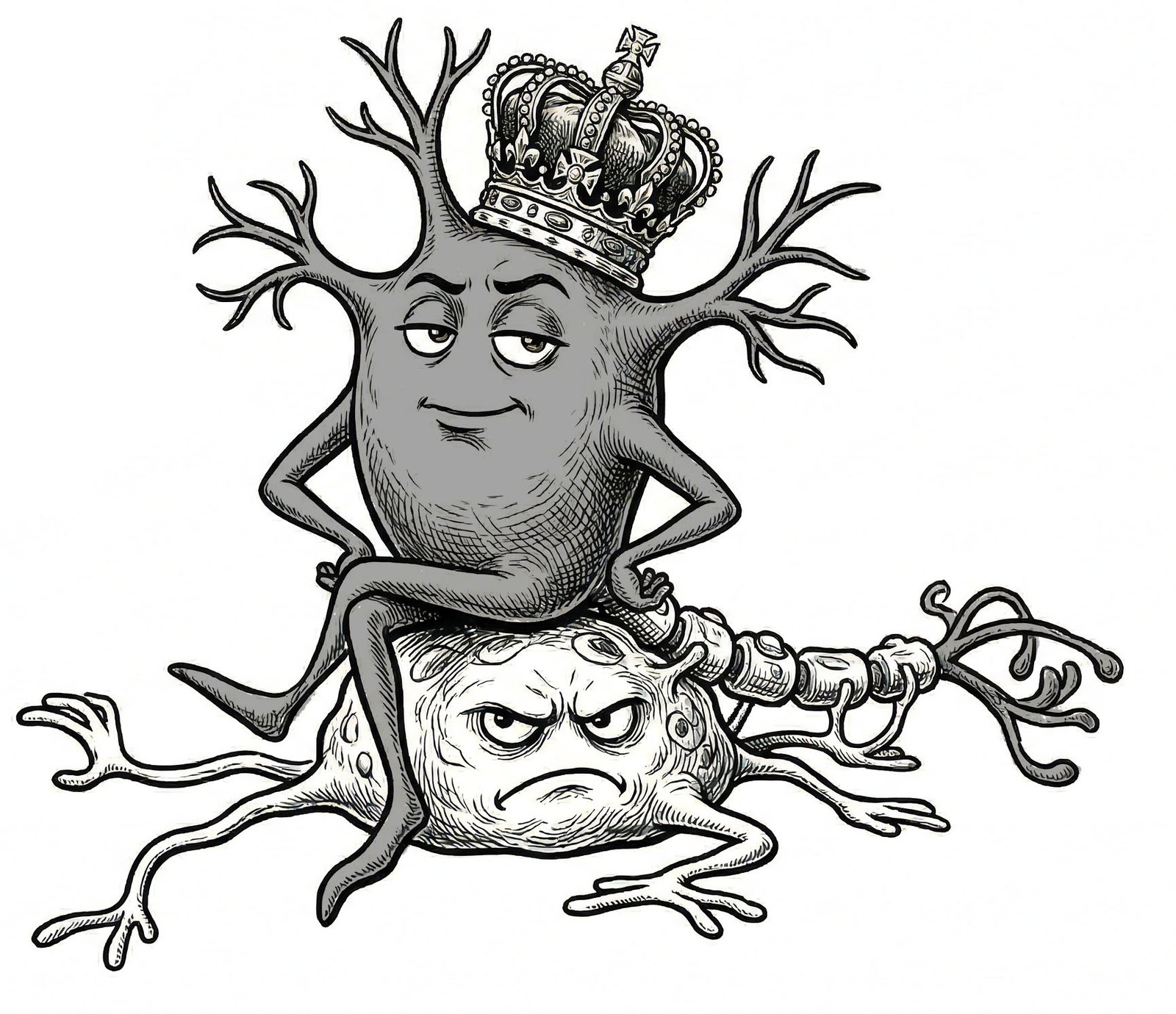
How the neuron got its crown
The neuron became the unit of selfhood for a reason that had nothing to do with biology and everything to do with technology. Neurons fire electrically. Electrical activity can be measured, amplified, displayed, mapped and modelled. When the tools of neuroscience arrived in the twentieth century, they arrived as tools for reading electrical signals, and the neuron, the cell that generates those signals, became the natural object of study.
The rest of the nervous system, the glial cells, the myelinated sheaths, the white matter that constitutes roughly half the volume of the brain, was not invisible exactly. It was present in every histological preparation, visible in every brain scan. But it was quiet. It did not fire. It did not generate the dramatic electrical patterns that the new instruments could read. It was treated as the scaffolding rather than the building, the support structure for the real work of the brain, which was happening in the neurons.
This was not a considered philosophical position. It was a technological artifact. We studied what we could measure. We named the science after what we studied. And then we built an entire taxonomy of human difference on top of a name that pointed at the wrong tissue.
Neuroscience is the study of the nervous system that named itself after the neuron. It is as if cardiology had named itself after the blood and spent a century puzzling over why the blood alone could not explain what the heart was doing.
The neuro prefix spreads
Once neuroscience had established the neuron as the unit of mind, the prefix spread with the speed and certainty of a well-myelinated pathway. Everything that wanted the authority of brain biology attached neuro to its name.
Neuroplasticity: the brain’s ability to change. Correct as an observation. Misleading as a name. The plasticity that matters for learning, for recovery from stroke, for the acquisition of skill and language and selfhood, is primarily a property of white matter. The myelinated axon that becomes faster, more reliable and more automatic through productive struggle is the biological substrate of what we call learning. The neuron fires the signal. The myelin changes in response to the firing. Neuroplasticity is mostly myeloplasticity.
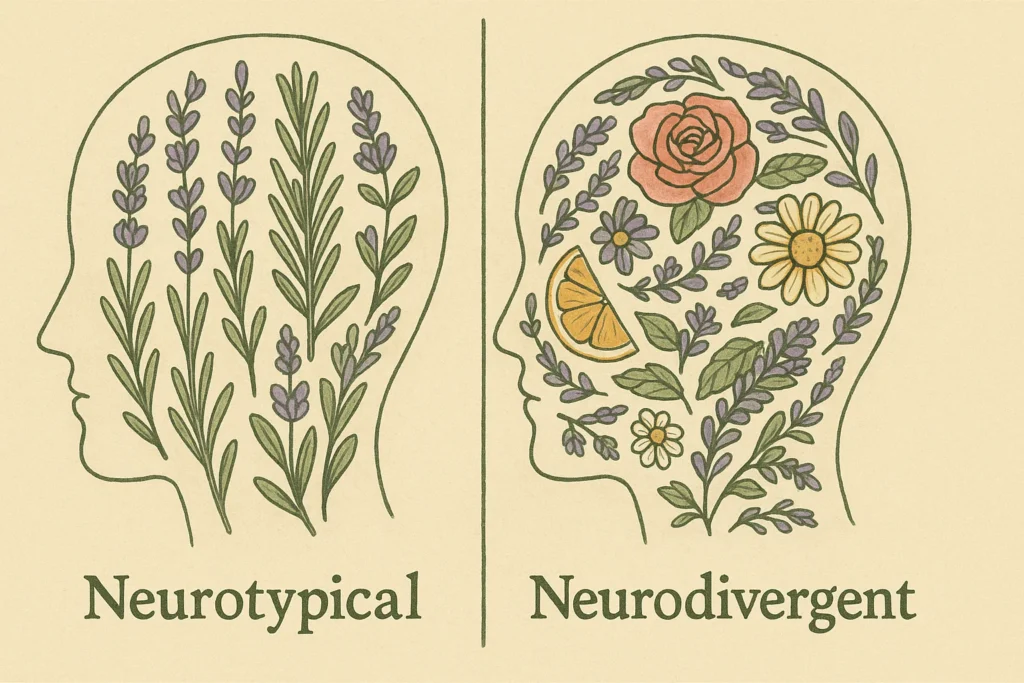
Neurodiversity: the recognition that human brains come in genuinely different configurations, and that those differences should be accommodated rather than pathologised. A valuable social and clinical intervention. A taxonomic error. The diversity that matters is not in the neuronal firing patterns but in the myelinated architecture that those patterns run through. Two people can have identical neuronal configurations and radically different selves because their white matter has been inscribed through different histories. Two people can have different neuronal configurations and produce very similar accumulated conditions through similar trajectories of productive struggle and encounter. The diversity is in the rhizome. The neuro prefix points at the delivery mechanism and mistakes it for the message.
Neurodivergent: a person whose nervous system diverges from the typical in ways that affect how they experience and interact with the world. Again, the observation is correct. The taxonomy is wrong. Divergent from what? From the typical neuronal configuration? But the neuron is not the unit of selfhood. The myelinated accumulated condition is. A person can have a typical neuronal architecture and a profoundly atypical self, built through an unusual history of encounter and inscription. A person can have an atypical neuronal architecture and a self that is, in every functional sense, well-inscribed and capable of rich chiasmic encounter with the world.
The divergence that matters is in the glial architecture, in the myelinated rhizome, in the accumulated biological condition of a lived life. Not in the neuron.
Three genuinely different conditions
The current taxonomy collapses three genuinely different biological conditions under a single prefix, and the collapse does clinical harm.
The first condition is a genetic difference in the machinery of myelination itself. In true autism, diffusion tensor imaging consistently shows altered white matter architecture in the social cognition and sensory processing pathways, present from early development, consistent across individuals, and not substantially responsive to environmental enrichment. The biological machinery for certain kinds of myelination is itself differently configured, not through lack of productive struggle but through the genetic conditions of synthesis. This produces a genuinely different experience of the world: a different chiasm, a different accumulated condition, a different self. It is not a deficit. It is a different rhizome.
The second condition is a behavioural poverty of myelination. A nervous system whose biological machinery for building the accumulated condition is intact but whose environment has not provided the productive struggle that would activate it. The discomfort that would have been the lactate signal, the signal that recruits the oligodendrocyte and drives the inscription of accumulated condition, has been reframed as evidence of exceptional sensitivity or neurological difference rather than as the ordinary friction of a nervous system that needs to do more work. The machinery is fine. The fuel has been withheld.
The third condition is the gliotypical nervous system navigating a world that has not yet understood what it requires. Not divergent. Not deficient. Simply under-resourced by an environment that has confused comfort with support and accommodation with care.
Three conditions. One prefix. Three completely different clinical and pedagogical responses required. The taxonomy cannot tell them apart because it is indexed to the wrong tissue.
The terms that follow from the thesis
If the self is the myelinated rhizome rather than the neuronal network, then the taxonomy of human difference should be indexed to the glial architecture. The replacement terms follow logically.
Gliotypical: a myelinated nervous system whose white matter architecture falls within the range that the species has accumulated as typical through evolutionary time. Not normal in a normative sense. Typical in the statistical and biological sense. The gliotypical person is not the standard against which others are measured. They are the person whose white matter has been inscribed through the ordinary developmental trajectory without significant genetic divergence in the machinery of synthesis.
Gliodivergent: a myelinated nervous system whose white matter architecture diverges from that range through genetic or developmental difference in the machinery of myelination itself. Not a pathology in the pejorative sense. A different rhizome producing a different chiasm and therefore a genuinely different experience of the world. The gliodivergent person requires genuine accommodation of a real biological difference, not because their experience is less valid but because the architecture that produces it is genuinely different and the world has not been built for it.
Gliodeficient: a myelinated nervous system whose white matter architecture is within the typical range of synthesis but has not been sufficiently inscribed through productive struggle. Not a pathology of biology. A poverty of circumstance. Remediable, in principle, through the provision of appropriate productive demand at the appropriate developmental moment. The gliodeficient person has been failed by their environment, not by their biology.
Three terms. Three genuinely different biological conditions. Three completely different clinical and pedagogical responses. The precision the current taxonomy lacks is available the moment we index the classification to the right tissue.
The resistance that will come
The neuro prefix will not be surrendered easily, and the resistance will come from several directions simultaneously.
Neuroscientists will resist because neuro is their disciplinary identity. A field that has spent a century building its authority under that name does not easily concede that the name points at the wrong tissue. The investment in the prefix is not merely terminological. It is institutional, financial and reputational.
Clinicians will resist because the diagnostic categories built on the neuro prefix are the instruments of clinical practice. ICD codes, DSM criteria, insurance reimbursement schedules, research grant categories: all of these are organised around neurological taxonomy. The practical cost of reclassification is enormous regardless of whether the reclassification is scientifically warranted.
Parents and patients will resist because the neuro prefix has become an identity. Neurodivergent is not just a clinical description for many of the people it labels. It is a community, a culture, a shared framework for understanding a self that has spent years feeling misunderstood. The identity provides belonging and the belonging is real even if the taxonomy is wrong. You cannot take a name away from people who have built a life around it without offering something that does the same work better.
And the pharmaceutical industry will not resist at all, which is itself informative. Gliodeficiency is not something you can patent a molecule for. The treatment for a nervous system that has not been given enough productive struggle is productive struggle. It is metabolically demanding, temporally extended, environmentally complex and completely unmonetisable. It is the one intervention that the pharmaceutical model of mental health has no mechanism for delivering and no financial incentive to develop.
What the prefix costs us
The cost of getting the prefix wrong is not merely terminological. It is clinical, pedagogical and ultimately biological.
When a child’s difficulty with sustained attention is classified as a neurological divergence rather than a glial deficiency, the clinical response is accommodation and pharmaceutical management rather than productive challenge and environmental redesign. The accommodation may be temporarily necessary. But if it replaces the challenge rather than enabling it, the white matter that the challenge would have built does not get built. The gliodeficiency deepens. The accommodation becomes permanent. The child becomes an adult whose accumulated condition is thinner than it needed to be, whose chiasm produces less meaning than it could have, whose life is lived in the shadow of a diagnosis that identified the symptom and missed the cause.
When the self is understood as neuronal, the interventions that follow target the neuron: pharmaceutical adjustment of neurochemistry, neurofeedback, transcranial magnetic stimulation, the whole apparatus of neural modulation. These interventions can be useful. Some of them are genuinely important. But none of them build accumulated condition. None of them drive the myelination that thickens the chiasm and produces the quality of encounter that registers as meaning. They adjust the signal. They do not build the structure that the signal runs through.
When the self is understood as myelinated rhizome, the interventions that follow are different in kind. They target the accumulated condition: productive struggle at the edge of current capacity, sustained meaningful engagement, the repeated encounter of therapeutic relationship, the slow inscription of a self through everything it has done and survived and learned. These interventions are less dramatic than a pill or a brain scan. They take months and years rather than weeks. They cannot be delivered in a fifteen minute appointment. They require an environment, a relationship, a sustained commitment to the biological work of building a self.
They are also the only interventions that address the cause rather than the symptom.
Toward a new prefix
The replacement prefix is not myelo, though myelo is more accurate than neuro for naming the biological substrate of selfhood. The replacement is not a prefix at all. It is a concept.
The concept is this: the self is the accumulated myelinated condition. The taxonomy of human difference should be indexed to the rhizome, to the white matter, to the biological inscription of a lived life, not to the electrical activity that runs through it. The differences that matter, the differences that determine how a person experiences the world, what they find meaningful, how they encounter difficulty, what kind of accumulated condition they are building and have built, are differences of white matter, not grey.
The prefix neuro got its authority from technology. It was what the instruments could read. It was where the electricity was. It was the dramatic, visible, measurable part of the nervous system that fit the metaphors of the century that named it.
The white matter is slower. More metabolic. Less dramatic. It does not fire. It does not appear on the EEG. It builds. It accumulates. It inscribes. It is the biological substance of everything we call self, memory, skill, meaning, identity and difference.
The science that names itself after the neuron and then tries to explain selfhood is like a musicologist who studies only the piano keys and wonders why they cannot explain what music is. The music is in the relationship between the keys and the accumulated condition of the musician who plays them. The self is in the relationship between the signal and the myelinated structure it runs through.
Neuroscience will find this eventually. The diffusion tensor imaging data is already pointing where the thesis points. The white matter research is already producing the evidence the prefix has been suppressing. The field is moving toward the rhizome whether it uses that word or not.
The prefix will follow. It always does.
Jack Parry is a philosopher, polyglot and biomedical animator at Swinburne University of Technology. He is the author of The Myelin Mind: The Genesis of Meaning.