keywords: antidepressants meaning myelin
Modern medicine has but three first aids.
1) Antibiotics for infection.
2) Analgesics for pain.
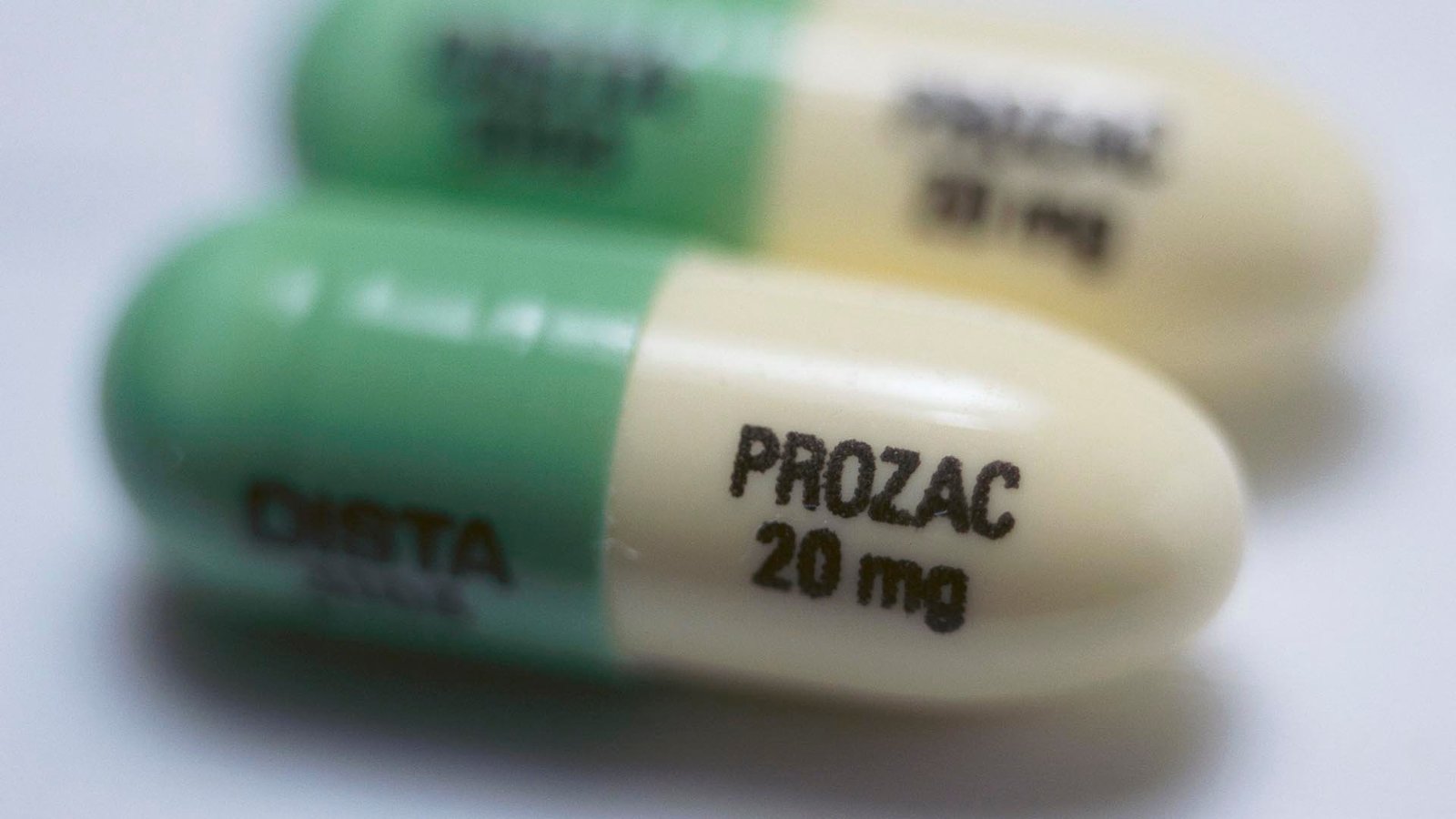
3) Antidepressants for depression.
The three conditions that a general practitioner reaches for a prescription pad to address, the three experiences so common and so debilitating that the pharmaceutical response has become reflexive, the default, the first rather than the last resort.
It is curious that two of these three are treatments for phenomenological maladies.
Pain is not a mechanical event. It is an experience, a quality of encounter between the nervous system and damage or threat, shaped by context, expectation, attention and accumulated condition in ways that pure nociception cannot account for.
Depression is not a chemical event. It is an experience, a quality of encounter between the self and the world in which the world arrives without sufficient resonance, in which the chiasm produces experience but not meaning, in which life is present but not felt as worth living.
The third first aid, the antibiotic, is derived from a rhizome. Penicillium mould, a distributed biological network without centre, had been solving the problem of bacterial competition through the accumulated chemical condition of its own existence for hundreds of millions of years before Alexander Fleming noticed the clearing around the mould colony on his petri dish in 1928. The medicine was already in the biology.
We learned to read it.
The Myelin Mind suggests that the medicine for the meaning crisis is also already in the biology. The difficulty is that we have been medicating the signal rather than reading what it says.
The serotonin story
The dominant pharmacological account of depression is the serotonin deficiency hypothesis: depression is caused by insufficient serotonin in the synaptic cleft, SSRIs correct this deficiency by preventing reuptake, and the correction produces the remission of symptoms. This account justified three decades of SSRI prescription that made antidepressants among the most widely prescribed medications in the world.
In 2022 a major umbrella review of the evidence for the serotonin hypothesis concluded that there is no consistent evidence for a relationship between serotonin levels and depression. The hypothesis, it turned out, had always been a pharmacological inference running backwards: SSRIs sometimes help, therefore serotonin deficiency must be the cause. It is like inferring that headaches are caused by aspirin deficiency.
This does not mean that SSRIs are useless. For some patients in some conditions they provide genuine relief.
But the mechanism of that relief is not what the prescribing model assumed, and the model’s collapse leaves a question that the pharmaceutical account never answered: what is depression actually?
The Myelin Mind has a proposal.
The thin chiasm
Depression is an impoverished chiasm. It is the experience of a self whose accumulated condition has not been richly enough inscribed to produce, in its encounter with the incoming signal of ordinary life, the quality of coupling that registers as meaning.
The world arrives and nothing in the white matter meets it with sufficient depth or resonance. The chiasm happens but it is thin. The coupling produces experience but not significance. Life is present but not felt as worth living. This is not a metaphor for depression. It is a description of what depression feels like from the inside, which is precisely what the serotonin model never managed to provide.
The Myelin Mind account predicts what the clinical literature confirms: that the most effective treatments for depression are the ones that build accumulated condition rather than the ones that adjust neurochemistry. Exercise, which generates lactate and drives myelination. Meaningful work, which creates the productive struggle that signals the oligodendrocyte. Sustained relationships, which inscribe the self through the accumulated experience of being reliably encountered by another. Psychotherapy, in the cases where it works, works not by resolving depression intellectually but by slowly building, through the repeated encounter of the therapeutic relationship, a new accumulated condition of sufficient depth to produce a thicker chiasm.
SSRIs, in the cases where they help, help by providing enough affective stability for the slow work of remyelination to begin. They are a prosthetic for the chiasm, not a repair of it. They buy time for something else to happen. In the cases where they don’t help, or where they flatten affect without addressing the thinness, they are managing the symptom while leaving the biological condition unchanged.
Prescribing an antidepressant to a person whose chiasm is thin from insufficient myelination is not wrong in the way that prescribing aspirin for a headache is wrong. It is wrong in the way that giving someone a wheelchair when what they need is physiotherapy is wrong. The wheelchair is not harmful. It may be temporarily necessary. But if it replaces the physiotherapy rather than enabling it, the person will never walk again.
The lactate shuttle and the stolen struggle
Here is where the argument becomes uncomfortable, because it is not only about individual pathology. It is about what the culture has done to the biological conditions for meaning.
Productive struggle generates lactate. The oligodendrocyte responds to lactate by laying down myelin. The accumulated condition deepens. The chiasm thickens. The experience of meaning intensifies. This is the biology of a life well lived, of skills acquired through difficulty, of languages learned by necessity, of relationships built through the sustained effort of showing up when it would be easier not to.
When productive struggle is removed, the lactate signal does not fire. The myelination does not happen. The accumulated condition remains thin. And the chiasm produces a thin experience that the organism correctly identifies as meaningless, because it is.
This is not a moral argument against comfort or technology. It is a biological observation about what meaning requires. Meaning is not a feeling that arises when life is pleasant. It is the quality of encounter that arises when a richly inscribed accumulated condition meets an incoming signal with sufficient depth to resonate. You cannot shortcut the inscription. You cannot myelinate through ease. The biology does not respond to comfort. It responds to demand.
The generation now presenting with the highest rates of depression, anxiety and crisis of meaning in recorded history is also the generation that has grown up with the most frictionless access to information, entertainment, social connection and emotional validation in human history. The algorithm delivers exactly what the nervous system reaches for in the moment, removing the productive discomfort of not knowing, not being entertained, not being seen, not immediately having what it wants. Every friction that would have been a lactate signal has been smoothed away.
The nervous system is correctly reporting that nothing is being built. The diagnosis calls it depression.
The Myelin Mind calls it the predictable biological consequence of a myelination environment that has been systematically impoverished.
The youth crisis

Young people’s white matter is still forming. The frontal and association pathways, the ones responsible for impulse control, sustained attention, the capacity for delayed gratification and the tolerance of difficulty, do not complete myelination until the mid-twenties. These are precisely the pathways most dependent on productive struggle for their inscription. They cannot be myelinated through passive consumption. They require difficulty, failure, the experience of trying and not immediately succeeding, the sustained effort of working through something hard enough to generate the lactate that recruits the oligodendrocyte.
If that myelination happens in an environment where the algorithm removes difficulty, where parents remove adversity, where teachers reframe struggle as trauma, where pharmaceutical intervention manages the affective turbulence that is the normal signal of a developing nervous system encountering genuine challenge, then the accumulated condition being built is thin, unearned and unable to produce the quality of chiasmic encounter that registers as a life worth living.
The child who is never allowed to fail does not learn resilience through moral instruction. They fail to myelinate the pathways that resilience requires. The adolescent whose every discomfort is medicated does not develop emotional regulation through insight. They fail to myelinate the accumulated condition that emotional regulation is built from. The young adult who has consumed ten thousand hours of algorithmic content and produced nothing of difficulty has a thinner accumulated condition than their grandparents had at the same age, not because they are weaker but because the environment has not provided the productive struggle that the biology requires.
This is not nostalgia.
It is neuroscience (or more correctly glio-science)
Gliodivergence and its impostor
The explosion in “neurodivergence” diagnoses over the past two decades requires the same precision the Myelin Mind applies to everything else. Not all conditions that present similarly have the same biological origin, and collapsing genuine pathology and environmental undermyelination under a single umbrella does a disservice to both.
True autism is a genetic myelination pathology. The evidence from diffusion tensor imaging consistently shows altered white matter architecture in the social cognition and sensory processing pathways specifically, present from early development, consistent across individuals with the diagnosis, and not responsive to environmental enrichment in the way that acquired difficulties are. The biological machinery for certain kinds of myelination is itself compromised, not through lack of productive struggle but through the genetic conditions of synthesis. This is a different kind of nervous system producing a genuinely different experience of the world. It is, in a precise sense, gliodivergent: the divergence is in the glial architecture, not the neurons.
The true autist’s characteristic raw honesty is not a social deficit in the pejorative sense. It is the absence of the myelinated social filtering that “neurotypical” accumulated condition builds through years of difficult social negotiation. The white matter architecture for that particular kind of filtering is not available in the same form. What comes through is more direct, less mediated, closer to the incoming signal without the accumulated editorial management that social myelination provides. This is not comfortable for the people around them. It is also not something they can choose to turn off. It is the shape of their chiasm.
Teaching gliodivergent students is, for those teachers willing to enter their world rather than demanding they enter ours, genuinely rewarding in a specific way. The unmediated encounter has a quality of contact that heavily socialised interaction rarely achieves. There is something there, something raw and direct, that the socially myelinated mind has learned to smooth over.
The undermyelinated student is something else entirely.
The second population presenting under the “neurodivergence” umbrella is not gliodivergent. It is behaviourally undermyelinated: a nervous system whose biological machinery for myelination is intact but whose environment has not provided the productive struggle that would activate it. The discomfort that would have been the signal, the lactate that would have recruited the oligodendrocyte, has been reframed as evidence of exceptional sensitivity rather than as the ordinary friction of a nervous system that needs to do more work.
A generation of educators has participated, with the best intentions, in this reframing. The child who finds sustained attention difficult has been told they have ADHD. Attention deficit – a deficit of the chiasm’s capacity to couple. The adolescent who finds social interaction uncomfortable has been told they are on “the spectrum”. The young adult who finds difficulty intolerable has been told they are neurodivergent. In each case the label is offered as explanation and accommodation, when what the nervous system actually required was the productive struggle that the label now exempts them from.
The distinction between these two populations is clinically real and phenomenologically precise.
The true gliodivergent student’s presentation is consistent, early-presenting, specific in its pattern and does not shift substantially in response to environmental demand.
The behaviourally undermyelinated student’s presentation is variable, context-dependent, and frequently resolves when genuine productive struggle is consistently provided and the accommodation is withdrawn.
One cannot improve through challenge. The other cannot improve without it.
The tragedy of collapsing that distinction under a single diagnostic umbrella is that it simultaneously fails the gliodivergent student, who needs genuine accommodation of a real biological difference, and enables the undermyelinated student, who needs genuine difficulty.
Both are harmed by the confusion. The gliodivergent student is surrounded by students whose difficulties are different in kind, diluting the understanding and accommodation their actual condition requires.
The undermyelinated student is exempted from the one thing that would help them.
The meaning crisis and what it actually is
The crisis of meaning gripping the developed world is not a philosophical problem.
It is a biological one.
Meaning arises at the chiasm. It is the quality of encounter between an accumulated condition rich enough to resonate and an incoming signal with sufficient depth to meet it. A thin accumulated condition, one built through passive consumption rather than productive struggle, one that has been protected from the adversity that would have deepened it, produces a thin chiasm. The world arrives and nothing meets it.
Life is present but not significant.
This is what the crisis of meaning feels like from the inside.
The antidepressant manages the feeling. The lactate shuttle addresses the cause.
This does not mean the solution is simple or that suffering should be glorified. A person in the acute phase of depression cannot generate productive struggle. The thin chiasm has to be stabilised before it can be thickened. The pharmaceutical prosthetic has its place in that stabilisation. But the stabilisation is not the treatment. The treatment is the slow, difficult, metabolically demanding work of building the accumulated condition that the chiasm needs to produce a life felt as meaningful.
Exercise. Sustained creative practice. Genuine relationship. Work that is hard enough to fail at. Languages learned by necessity. Skills acquired through repetition at the edge of competence.
The company of people who do not tell you that your difficulty is your identity.
These are not lifestyle recommendations. They are biological prescriptions. They work because they generate the lactate that drives the myelination that thickens the chiasm that produces the meaning that the nervous system correctly identifies as the point of being alive.
The three first aids will not be abandoned.
Antibiotics save lives.
Analgesics manage pain that would otherwise be incompatible with function.
Antidepressants stabilise crises that would otherwise be irreversible.
But the first aid is not the medicine.
The medicine is the productive struggle. The biology has always known this. We just stopped providing the conditions in which it could do its work.
Jack Parry is a philosopher, polyglot and biomedical animator at Swinburne University of Technology. He is the author of The Myelin Mind: The Genesis of Meaning.