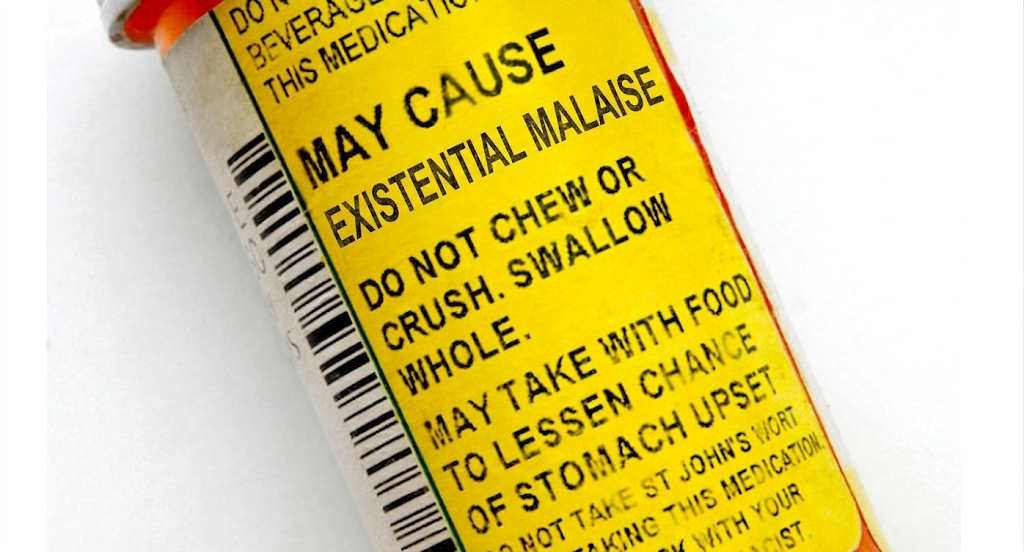
Disclaimer
A note before you read further. I am a doctor. A Doctor of Philosophy, not of medicine. Nothing in this article constitutes medical advice and I am not qualified to offer any.
What follows is a collection of readily available scientific information, laid out for you, the reader, to make your own discoveries and draw your own conclusions.
I am qualified to offer philosophical and existential diagnoses only. For everything else, please consult someone with at least a basic medical training.
I don’t even have a first aid certificate.
In 2014 a team of researchers at Case Western Reserve University set out to find existing approved drugs that might promote remyelination. Rather than developing new compounds from scratch, they screened the existing pharmacopeia, thousands of molecules already deemed safe enough for human use, for any that showed effects on oligodendrocyte precursor cells, the cells that differentiate into the myelin-producing oligodendrocytes of the central nervous system.
They found montelukast.
Montelukast is a leukotriene receptor antagonist. It had been prescribed since 1998 for the management of asthma and allergic rhinitis. Millions of people had taken it. Paediatricians prescribed it routinely for children with asthma. Nobody had designed it with myelin in mind. Nobody had asked what it was doing to the myelination machinery. It had been approved, prescribed and taken for sixteen years before anyone thought to look.
When they looked, they found that montelukast promotes oligodendrocyte precursor cell differentiation, supports the transition from precursor to mature myelinating oligodendrocyte, and enhances remyelination in animal models of demyelinating disease. Subsequent research has confirmed and extended these findings. Clinical trials in multiple sclerosis are now underway.
There is another side to the montelukast story that the remyelination research does not diminish but does complicate. In 2020 the FDA added a black box warning to montelukast, its most serious category of regulatory caution, for neuropsychiatric events including depression, suicidal ideation, psychosis and completed suicide. The case reports that drove the ruling included very young children. The warning had been under review since at least 2008.
What the ruling speaks to, and what it means for our understanding of how pharmaceutical compounds interact with the developing myelinated nervous system, is the leading argument of The Myelin Mind: The Genesis of Meaning.
The drug did not change. The question changed. And the changed question revealed that a medication prescribed for hay fever was doing something significant to the most important biological machinery in the nervous system, something that had been happening in millions of nervous systems for sixteen years without anyone knowing.
Montelukast is not an anomaly. It is an illustration of how much we do not know about what our medications are doing to our myelin.
The myelination machinery and its entry points
To understand why so many medications might be affecting myelination without intending to, it helps to understand how many entry points the myelination machinery has.
The process of myelinating an axon begins with oligodendrocyte precursor cells proliferating in response to signals from damaged or unmyelinated axons. These precursors then differentiate into mature oligodendrocytes, a transition that requires specific growth factors, signalling molecules and metabolic conditions. The mature oligodendrocyte then extends processes toward target axons, wraps its membrane around the axon in a tightly regulated spiral, synthesises the lipids and proteins that constitute the sheath, and maintains the paranodal junctions that anchor the sheath to the axon at the nodes of Ranvier.
Each of these steps is a potential entry point for pharmaceutical interference, positive or negative. A drug that promotes precursor proliferation accelerates remyelination. A drug that inhibits differentiation slows it. A drug that interferes with cholesterol synthesis, which the oligodendrocyte performs locally for myelin membrane production, disrupts the sheath regardless of its intended target. A drug that affects the lactate shuttle from astrocyte to axon, the metabolic signal that recruits oligodendrocytes to active pathways, alters the entire logic of activity-dependent myelination.
Most drugs are not designed with any of these steps in mind. They are designed for their primary target, a receptor, an enzyme, an ion channel, and their effects on the myelination machinery are secondary, unintended and largely uninvestigated.
The cholesterol question
Myelin is one of the most cholesterol-rich structures in the body. Not lipid-rich in the general sense. Specifically, densely, structurally cholesterol-rich. The oligodendrocyte and the Schwann cell synthesise cholesterol locally to build and maintain the sheath. This local synthesis is the biological foundation of the myelinated rhizome as a totality, from the central pathways of the brain to the peripheral fibres that carry the body schema through every limb and organ.
It follows from this as a matter of biological logic that any process which interferes with cholesterol synthesis, anywhere in the body, will have implications for the integrity of that rhizome. This is not a claim about any particular compound or manufacturer. It is a statement about the biology of myelin.
The blood brain barrier is sometimes invoked at this point as a reassurance. If a compound does not cross into the central nervous system, the argument goes, then the oligodendrocytes of the brain and spinal cord are protected from its effects. This reassurance is less complete than it appears. No compound can be stated with confidence to pass or not pass the blood brain barrier in all individuals under all conditions. Barrier permeability varies with age, inflammation, blood pressure and a range of other factors. The question of CNS penetration cannot be closed by assumption in either direction.
But the peripheral nervous system question requires no assumption about the blood brain barrier at all. The Schwann cells that myelinate every sensory and motor pathway in the body, that constitute the biological substrate of embodiment itself, of the felt sense of inhabiting a body in space, are not protected by any barrier. They are in direct biological relationship with systemic circulation. Whatever reaches the peripheral tissues reaches them.
The implications of interfering with cholesterol synthesis for the myelinated rhizome in its totality, central and peripheral, are a question that the biology poses clearly. The reader is in the best position to connect that question to whatever compounds they are considering.
The known harms
Some medications have well-established effects on the myelination machinery that are recognised clinically even if they are not always framed as myelin stories.
Vincristine and cisplatin, both widely used chemotherapy agents, produce peripheral neuropathy through Schwann cell toxicity. The neuropathy is dose-dependent and in some patients persistent. It is a direct myelin story: the Schwann cells of the peripheral nervous system are damaged by the treatment, the accumulated condition of the peripheral myelinated pathways is disrupted, and the intentional arc of the body schema is compromised. For some cancer survivors the neuropathy resolves as remyelination occurs. For others it is permanent.
Amiodarone, the antiarrhythmic used in the management of serious cardiac arrhythmias, produces a peripheral neuropathy in some long-term users that is in part a demyelinating neuropathy. The mechanism involves accumulation of the drug and its metabolites in peripheral nerve tissue with direct toxic effects on Schwann cells. The neuropathy is typically slowly progressive and partially reversible on dose reduction.
Metronidazole, the antibiotic used for anaerobic infections and certain parasitic diseases, produces a peripheral and occasionally central neuropathy at high doses or with prolonged use. The mechanism includes interference with thiamine metabolism, which is essential for myelin maintenance, and possible direct neurotoxicity.
Nitrous oxide, used in anaesthesia and as an analgesic, inactivates vitamin B12 through oxidation of its cobalt centre. In patients with borderline or undiagnosed B12 deficiency, even a single prolonged exposure can precipitate subacute combined degeneration, the frank demyelination of the spinal cord that represents the most severe expression of B12 deficiency. This is a well-documented and entirely preventable myelin story that continues to occur because B12 status is not routinely checked before procedures involving nitrous oxide.
Certain antiepileptic medications, particularly phenytoin at high doses and over long periods, have been associated with peripheral neuropathy and cerebellar changes that may in part reflect effects on myelination. The mechanisms are incompletely understood.
In each of these cases the myelin story is visible if you are looking for it. The question is whether the clinical and pharmaceutical communities are systematically looking.
The uninvestigated landscape
The known harms and the accidental benefits like montelukast represent only the fraction of the pharmaceutical landscape where someone happened to look at the myelination machinery. The uninvestigated landscape is vastly larger.
Consider the scale of the question. There are thousands of approved medications in common clinical use. Each of them has a primary mechanism of action and a range of secondary effects on other biological systems. The myelination machinery, with its multiple entry points across oligodendrocyte precursor proliferation, differentiation, cholesterol synthesis, myelin protein production, paranodal junction maintenance and the astrocyte-axon lactate shuttle, presents dozens of potential targets for secondary pharmaceutical interference.
Systematic screening of the approved pharmacopeia for effects on myelination, in the way that the Case Western team screened for remyelinating compounds and found montelukast, has barely begun. The tools to do it, cell culture models of oligodendrocyte differentiation, animal models of remyelination, eventually human imaging studies of myelin water fraction as a measure of myelin integrity, exist. The systematic application of those tools to the question of what commonly prescribed medications are doing to myelin does not yet exist at the scale the question requires.
The medications most worth investigating are those that touch the known entry points of the myelination machinery as secondary effects. Medications that affect cholesterol metabolism. Medications that affect inflammatory signalling in the central nervous system. Medications that affect astrocyte function and the lactate shuttle. Medications that affect the growth factor signalling that drives oligodendrocyte precursor proliferation and differentiation. Any of these could be affecting myelination, positively or negatively, in the millions of people who take them.
Some of those effects may be clinically significant. Some may be trivial. Some may explain outcomes that are currently attributed to other mechanisms. We do not know. We have not asked.
What the Myelin Mind framework demands
The Myelin Mind account of consciousness, selfhood and the accumulated condition of a lived life is not a framework that sits comfortably with the idea that we are prescribing medications to millions of people without asking what those medications are doing to the biological substance of the self.
The myelinated nervous system is not a peripheral concern of pharmaceutical development. It is the substrate of everything that a person is, their memories, their habits, their skills, their sense of self, their capacity for meaning and pleasure and connection. Medications that affect the myelination machinery are not affecting a secondary biological system. They are affecting the primary biological structure of personhood.
This is not a counsel of pharmaceutical nihilism. The cardiovascular benefit of statins for people at high risk of heart attack is real and the medication is appropriate for those people. The bronchodilatory benefit of montelukast for a child with asthma is real, and now it appears there may be an additional myelination benefit that nobody intended. The antibiotic effect of metronidazole saves lives. The risk to myelin at high doses is a reason for dose caution and monitoring, not a reason to withhold necessary treatment.
It is a counsel of pharmaceutical precision. Ask what the medication is doing to the myelination machinery. At what dose does a neuroprotective effect become a neurotoxic one. Which patients are most vulnerable, those with borderline B12 status before nitrous oxide, those with pre-existing peripheral neuropathy before vincristine, those with early demyelinating disease before statins. Build the myelin question into the pharmacological conversation rather than discovering the answer retrospectively in the side-effect profiles of drugs that have been prescribed for decades.
Montelukast was doing something to myelin for sixteen years before anyone looked.
So let’s ask the question together: what else is?
Jack Parry is a philosopher, polyglot and biomedical animator at Swinburne University of Technology. He is the author of The Myelin Mind: The Genesis of Meaning.