Dr Jack Parry 2 May 2026
keywords: drawing painting animation myelin white matter practice talent signature identity embodiment visual art
Every child draws. They do it before they can speak in sentences, before they have been taught what drawing is for, before anyone has explained perspective or composition or the difference between seeing and depicting. They pick up whatever makes a mark and they make one, and they are entirely absorbed in doing it, and the absorption is the point. Something is happening in the hand-eye encounter that has nothing to do with the product. The mark is almost incidental. What matters is the doing.
The Myelin Mind thesis would say: the child is myelinating. The sustained, absorbed, attentive repetition of mark-making is driving axonal activity in the visual-motor pathways, and the oligodendrocyte precursor cells lining those pathways are responding to that activity by differentiating, by wrapping the axons in myelin, by inscribing the experience of hand meeting surface in the white matter architecture of the developing nervous system. The child who draws compulsively for ten years and the child who draws occasionally for the same period will have different visual-motor white matter at the end of it. Not different talent. Different geology.
A 2023 study using diffusion spectrum imaging compared the white matter of experienced visual artists to matched controls. The artists showed enhanced fibre tract integrity in the cortical visual system, specifically in the right inferior temporal and lateral occipital regions, the areas responsible for the recognition and processing of complex visual forms. The enhancement was not randomly distributed across the brain. It was concentrated precisely in the pathways that drawing and painting most intensively exercise: the connections between visual recognition and visual-motor execution, the routes along which the seen becomes the drawn. And the degree of enhancement correlated with measures of visual creativity. The accumulated white matter condition and the creative capacity were not separable. They were the same thing measured twice.
This is what the most naturally talented student in any animation programme actually has. Not a gift that arrived independently of their history. A white matter architecture built through years of compulsive mark-making, of sustained visual attention, of the specific productive struggle of trying to make the hand do what the eye is seeing. The student who has been drawing since they could hold a pencil arrives in the studio with a visual-motor accumulated condition that no amount of technically competent late-starting répétition can quickly replicate. The difference is not in what they were born with. It is in what they have been building since the age of three.
Animation is the most demanding form of this practice. It inherits everything that drawing requires and adds the demand of temporal extension: the drawing must not only capture a form but sustain it through movement, maintaining the character of a figure across thousands of individual frames, each one a drawing, each one requiring the same hand-eye precision applied to a slightly different spatial configuration. The animator who has been drawing compulsively since childhood has a visual-motor accumulated condition of extraordinary richness, and it is not exchangeable with technical training alone.
I have been teaching animation for thirty years, and the pattern is consistent. The students whose work has the quality that is called talent are almost invariably the ones who have drawn obsessively since early childhood, who fill sketchbooks automatically, who draw on the margins of notes, who cannot pass a surface without thinking about what they would put on it. They are not more intelligent than their peers. They are more myelinated in precisely the pathways that animation requires. The ease that reads as talent is the surface of a geological formation built through years of absorbed, attentive répétition before anyone called it training.
The students who begin drawing seriously at eighteen can and do become excellent animators. But they are building their geological formation later, on a different substrate, and the character of what they build will be different, not inferior necessarily, but differently formed, carrying the marks of a different developmental history in its accumulated condition.
Handwriting is where the visual-motor myelination story becomes most intimate and most philosophically strange.
Every person who writes by hand develops a handwriting that is uniquely theirs. Not in the superficial sense of stylistic preference, but in a biological sense that the forensic document examiner relies on professionally. The precise pressure, the specific angles, the characteristic rhythm of letter formation, the way the pen lifts and falls, the idiosyncratic joins between letters, these are not learned performances. They are the direct expression of a visual-motor accumulated condition built through years of writing, inscribed in the white matter of that particular nervous system and no other. The graphologist’s claim that handwriting reveals character is, through the Myelin Mind lens, literally true. The handwriting is the accumulated condition. The accumulated condition is the self. To read the handwriting carefully is to read the geology of a life.
No two people’s handwriting is identical, even when they have been trained in the same script, by the same teacher, using the same exercises. The myelinated condition that produces the handwriting is always already particular. It is the self, inscribed in motion.
And then the signature.
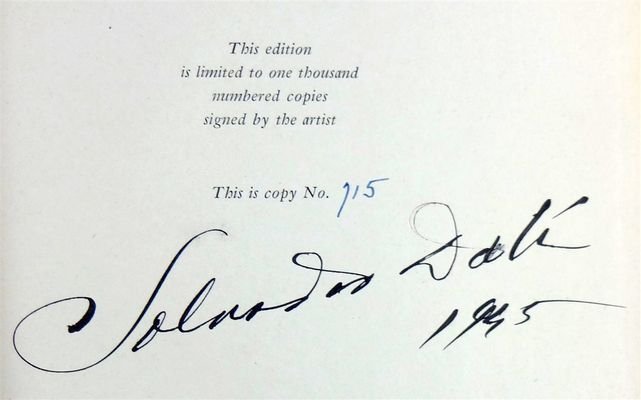
The signature is the most compressed expression of the accumulated myelinated condition of handwriting. It is the self reduced to its most characteristic gesture, repeated thousands of times over a lifetime until it requires no conscious attention whatsoever. The accumulated condition produces it automatically, from its own interior, without deliberation. The signature is the chiasm operating at maximum inscriptional depth: the accumulated self, expressing itself in a single mark, faster and more reliably than any other form of self-expression the person possesses.
What is philosophically extraordinary is what human legal systems have recognised about this, and recognised without knowing the biology. The signature is accepted as legal identity. Not a photograph of the face, not a record of the voice, not a DNA sample. The mark that the accumulated myelinated condition of a particular nervous system makes when asked to sign its name. The law has intuited, through millennia of practical experience with human identity, that the most reliable external trace of a self is the one that the self’s accumulated condition produces most automatically and most characteristically.
And the signature is accepted beyond death.
A will signed before death carries legal force after it. A deed, a contract, a letter, a work of art authenticated by the artist’s signature, these instruments remain operative as legal representations of the self after the self that produced them has ceased to exist as a living nervous system. The myelinated inscription outlasts the myelin. The mark that the accumulated condition made persists as the legal representative of that condition, recognised by courts and institutions as the self’s eternal representative, its identity as inscribed.
The forger knows this too, in their own way. To replicate a signature convincingly requires building an approximation of the same accumulated myelinated condition, through sustained, attentive repetition of the same mark, until the forger’s hand can produce something close enough to the original that the difference is not legible to an untrained eye. The best forgers do not copy signatures. They practise them, for months, until the movement is inscribed in their own motor white matter. They are building a copy of someone else’s geological formation in their own nervous system, and the copy is always detectably imperfect, because the accumulated condition is always particular, always the product of a specific developmental history that cannot be exactly replicated in a different nervous system.
The signature cannot be perfectly forged because the accumulated condition cannot be exactly duplicated. The self, as inscribed, is irreducible.
The child who picks up a crayon and makes a mark without knowing what drawing is does not know that they are beginning a geological process that will, over decades of absorbed répétition, produce a visual-motor accumulated condition that no other nervous system will ever exactly replicate. They do not know that the mark-making they are absorbed in will eventually compress itself into a signature that carries their legal identity across their death.
They know only that the hand meeting the surface is absorbing, that the mark is evidence of the encounter, and that they want to make another one.
That wanting is the beginning of myelination. The wanting and the doing, again and again, until the doing lives in the white matter and the white matter does the doing.
Further Reading
The diffusion spectrum imaging study confirming enhanced white matter fibre tract integrity in the cortical visual system of experienced visual artists, with the enhancement correlating with visual creativity measures: Chen L et al. Enhanced white matter fiber tract of the cortical visual system in visual artists: implications for creativity. Front Neurosci. 2023;17:1248266. doi:10.3389/fnins.2023.1248266
The study confirming that drawing and painting training produces measurable structural and functional neural changes in art students, with white matter organisation as a key component of emerging artistic expertise: Chamberlain R et al. The artist emerges: visual art learning alters neural structure and function. NeuroImage. 2014;105:440-51. doi:10.1016/j.neuroimage.2014.11.014
The study establishing that pre-existing white matter microstructure in associative visual-motor tracts predicts the rate of sensorimotor drawing learning: Yeatman JD et al. Associative white matter tracts selectively predict sensorimotor learning. PLoS Biol. 2024;22(6):e3002675. doi:10.1101/2023.01.10.523345
The companion article on this site covering the music-myelin story, répétition, and the jazz improvisation as accumulated condition speaking: La Répétition: Music, Myelin and the Embodied Self — https://myelinmind.com/la-repetition/
The companion article covering activity-dependent myelination as the biological mechanism of skill acquisition through productive struggle: The Myelin Mind Thesis — https://myelinmind.com/#thesis
Jack Parry is a philosopher, polyglot and biomedical animator at Swinburne University of Technology. He is the author of The Myelin Mind: The Genesis of Meaning.