Keywords: autism, gliodivergence
Oliver Sacks titled one of his most celebrated collections An Anthropologist on Mars. The phrase came from Temple Grandin herself, one of the most articulate and accomplished autistic people alive, describing what it felt like to navigate a social world that most people inhabit without effort or reflection. She was not complaining. She was describing a genuine phenomenological condition, the experience of someone who must study consciously and deliberately what others absorb without knowing they are absorbing it.
Sacks was drawn to autism not as a pathology to be corrected but as a different form of intelligence to be understood. His case histories approach each autistic person with the same curiosity he would bring to an encounter with an entirely unfamiliar way of being in the world. Not a damaged mind – a totally different kind of mind.
The Myelin Mind framework agrees with that instinct and can now say why, in biological terms.
Myelotypical
Before examining what autism is, it is worth being clear about what it is not.
The word neurotypical, which has become standard in autism discourse, carries a hidden assumption. It locates the norm in neural architecture, implying that there is a correct pattern of wiring from which autism deviates. This is wired mind thinking applied to human diversity. It treats neurons as the primary site of identity and frames everything else as variation from the correct configuration.
The Myelin Mind uses a different term: myelotypical.
A myelotypical person is not someone with the correct neural wiring. They are someone whose accumulated myelinated condition has been shaped by the same broad range of social, linguistic, and cultural encounters that most of the people around them have undergone. The norm is biographical and cultural, not architectural. It is the result of thousands of hours of shared encounter with the same conventions, the same language, the same social rhythms, the same implicit rules of a shared world.
Myelotypical in Melbourne is not myelotypical in rural Mongolia. The accumulated condition is always the condition of a particular somewhere and someone. The standard is not universal. It is local, historical, and inscribed.
This matters because it means autism is not a deviation from a biological universal. It is a difference in how the nervous system myelinates, and therefore a difference in what accumulated condition the incoming signal of the social world meets.
The myelinated structure of a social world
Most of what we call social competence is not innate. It is myelinated.
Eye contact, the right amount at the right moments, in the right cultural context, is a myelinated achievement. Turn taking in conversation, the implicit timing that allows two people to speak without constant collision or silence, is a myelinated achievement. Reading facial expression, recognising irony, understanding that what someone says and what they mean are often different things, all of these are accumulated through thousands of hours of social encounter in early childhood, inscribed in the white matter as the accumulated condition that every subsequent social signal meets.
For the myelotypical person, this accumulated condition is so thoroughly inscribed that its operation is entirely invisible. Social conventions feel like common sense because they have been myelinated to the point where they require no conscious effort. The world of other people feels obvious because it has been inscribed as familiar.
For the gliodivergent person, this is not what happened. Not because the encounters were absent, but because the nervous system myelinates differently, following a different genetic logic, building a different accumulated condition from the same raw material of social encounter. The result is a nervous system that has its own integritand its own accumulations, but whose myelinated structure does not map cleanly onto the myelotypical social world
Mild gliodivergence: the deep channel
At the mild end of the spectrum, the gliodivergent accumulated condition is characterised by what might be called deep channel myelination. The nervous system inscribes intensely within specific domains, particular interests, particular sensory experiences, particular ways of processing information, to a depth that the myelotypical nervous system rarely achieves. The accumulated condition in these domains is extraordinarily rich.
What is attenuated is the long range integration that myelotypical social myelination builds. The white matter pathways that connect local domains into a broader social and contextual field are less developed. The result is a person who can be extraordinarily capable, even exceptional, within their domain, and genuinely puzzled by a social world that operates through conventions they have not myelinated.
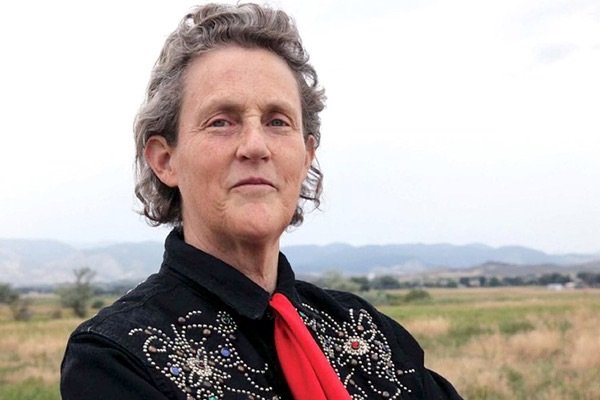
Temple Grandin is the most documented example. Her accumulated condition in the domain of animal behaviour and mechanical systems is exceptionally deep. Her accumulated condition in the domain of human social convention is thin. She has compensated for the thinness through conscious study, learning explicitly what myelotypical people absorb implicitly. She is, as she said herself, an anthropologist on Mars. She has learned the customs of a foreign culture through deliberate investigation rather than through the ordinary process of myelinated inscription.
This is not deficit. It is difference. The deep channel comes with its own gifts, its own precision, its own resistance to the social conventions that can constrain myelotypical thinking as much as they enable it.
Textbook gliodivergence: the social world as foreign territory
Further along the spectrum, the atypicality is more pervasive. The long range white matter architecture is more substantially different, affecting not just the integration of social signals but the pragmatic, contextual, socially embedded dimensions of language itself.
Language in the myelotypical accumulated condition is never just words. It carries tone, implication, context, social register, the accumulated weight of every previous encounter with that word in that kind of situation. This is what makes a native speaker different from a fluent second language learner. The native speaker has myelinated the language in all its social and contextual richness. The second language learner has learned the code but not the weight.
For the textbook autistic person, social language often works like a second language even in the mother tongue. The words are present. Their pragmatic, contextual, socially embedded dimension is thin. Communication happens but requires conscious effort that myelotypical speakers do not expend.
Sacks documents this repeatedly in An Anthropologist on Mars. His subjects are intelligent, articulate, and genuinely engaged with the world. What they lack is not intelligence but the automaticity that myelination provides. Every social interaction requires conscious processing that should, for a myelotypical person, proceed without awareness.
Profound gliodivergence: the foundational layer
In profound autism, the atypicality reaches deeper than the social and linguistic accumulated condition. It affects the foundational sensorimotor layer that underlies all subsequent inscription.
The evidence for this comes from a consistent and striking finding in the neurology of autism: oculomotor abnormalities. Multiple independent studies document difficulties with saccade accuracy, smooth pursuit, and the inhibition of reflexive eye movements in autistic people, with the severity increasing in more profound presentations.
The neurological structures implicated are the cerebellar vermis and its projections to the brainstem nuclei that control eye movement timing and accuracy. These are among the earliest myelinating structures in the nervous system. They are the biological foundation on which all subsequent accumulated condition is built.
If myelination in these structures is atypical from the earliest developmental stages, the foundational sensorimotor layer of the accumulated condition is differently built. Everything inscribed on top of that foundation is inscribed on different ground.
This is where an eidetic connection to a very different condition becomes illuminating. The oculomotor crises of encephalitis lethargica, the fixed gaze, the inability to initiate voluntary eye movements while reflexive movements remain partially intact, also implicate the brainstem and cerebellar structures. The cause is entirely different, an acquired inflammatory process rather than a genetic developmental difference, and the mechanism is different. But the structures that are disrupted, and the consequences for the person’s relationship with the world, rhyme.
In encephalitis lethargica, previously normal myelination is disrupted by inflammation. The intentional arc freezes. In profound autism, the foundational myelination has always been different. The intentional arc never had the same ground to build from.
The consequence in both cases is a person who is unmistakably present, whose inner life is clearly active, but who cannot easily reach across the gap between their accumulated condition and the myelotypical world. Not because the person is absent. Because the bridge is built differently.
What is there, behind the gap
Sacks was insistent on this point throughout his career. The person is there. The inner life is there. The difficulty is not absence but access, the problem of building a bridge between two differently myelinated worlds.
This is the most important thing the Myelin Mind framework contributes to the understanding of profound autism. The absence of myelotypical social communication does not mean the absence of experience. It means the absence of a particular accumulated condition, the one that makes myelotypical communication automatic.
What is present, in its place, may be a form of experience that is more immediate, less mediated by the social conventions that myelotypical inscription imposes. The incoming signal of the world meets an accumulated condition that is different in its architecture, its priorities, its depth in certain domains and thinness in others.
This does not make profound autism easier to live with, for the person or for those who love them. The gap between differently myelinated worlds is real and often painful. But understanding it as a difference in accumulated condition rather than an absence of mind is not a consolation. It is an insistence on what is actually true.
The gliodivergent mind is not a broken myelotypical mind. It is a different kind of accumulated condition, with its own integrity, its own depth, and its own relationship to the world. The Myelin Mind framework does not resolve the difficulties that come with that difference. But it offers a way of understanding what the difference actually is, which is at least a reasonable place to begin.
Jack Parry is a philosopher, polyglot and biomedical animator at Swinburne University of Technology. He is the author of The Myelin Mind: The Genesis of Meaning.