There is a particular kind of knowledge that belongs only to parents.
Not medical knowledge. Not diagnostic knowledge. Something more intimate and more precise than either. The knowledge that comes from watching a person accumulate themselves, day by day, from the first grasp of a finger to the first word, from the first step to the first sentence, from the first joke understood to the first book read alone. A parent watches this accumulation with a closeness that no clinician can replicate. They are present for the daily miracles, each one small, each one irreversible, each one adding another layer to the structure of a self.
When that process stops and begins to reverse, the parent sees it with a precision and an anguish that no diagnostic category can contain.
A neurologist can identify adrenoleukodystrophy from an MRI. A geneticist can locate the mutation in the ABCD1 gene. A biochemist can measure very long chain fatty acid levels in the blood. But only the parent knows that two weeks ago the child could do something they can no longer do today. Only the parent knows the exact sequence in which the skills are disappearing, because they were present for the exact sequence in which those skills were built. The reversal is visible to them with a clarity that is unbearable precisely because it is so specific.
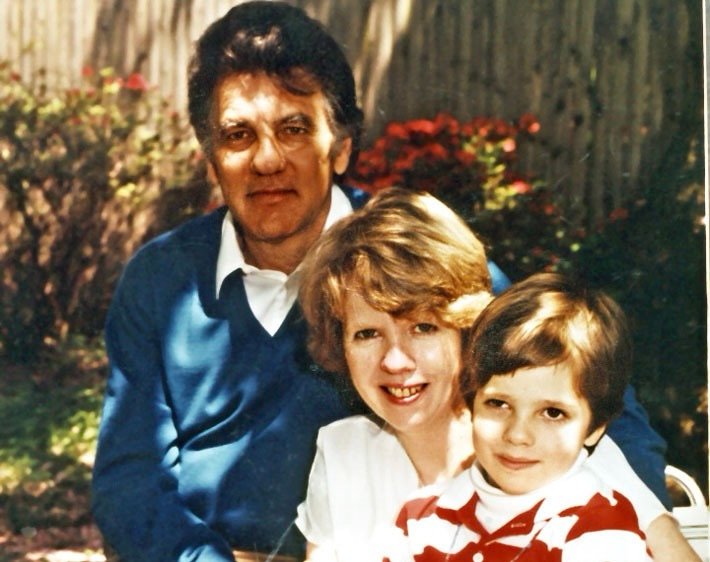
This is what Augusto and Michaela Odone had that the medical establishment did not. They had Lorenzo. They had watched him become himself. And when ALD began to unmake him, they could see it happening in a way that transformed their grief into a kind of biological knowledge that the institution was not equipped to recognise.
What ALD does
Adrenoleukodystrophy is caused by a mutation in the ABCD1 gene, located on the X chromosome. The gene encodes a protein that transports very long chain fatty acids into peroxisomes, where they are broken down. When the protein is absent or deficient, VLCFAs accumulate in tissues throughout the body. The most severely affected tissues are the myelin of the central nervous system, the adrenal cortex, and the testes.
In the childhood cerebral form, the form that destroyed Lorenzo’s life, the accumulating VLCFAs trigger an inflammatory response in the brain’s white matter. The inflammation attacks the myelin sheath. The oligodendrocytes that produce and maintain the myelin are destroyed. The white matter burns.
And what burns does not return. Central nervous system myelin, unlike peripheral myelin, has very limited capacity for repair. The oligodendrocyte population that is destroyed by the inflammatory process is not readily replaced. The demyelination is not reversible. What has been lost stays lost.
The progression follows a brutal logic. The disease strips white matter in roughly the reverse order of its development, the most recently myelinated pathways failing first. The last skills acquired are the first to go. The highest, most complex, most elaborately myelinated structures of the self begin to dissolve first. Then the middle layers. Then the foundations.
This is the pattern the Myelin Mind calls retrogenesis. The accumulated condition unspools in reverse. The self does not disappear all at once. It unravels, in the exact order it was wound.
The parent watching this knows every layer being lost. They were present when each one was laid down.
The Odones and the institution
When Lorenzo was diagnosed in 1983, adrenoleukodystrophy was considered a death sentence with no treatment options. The medical establishment was looking at the condition through the standard lens of the time. The neurons were the primary concern. The myelin was acknowledged as the site of damage but not as the target of intervention.
Augusto Odone was an economist. Michaela Odone was a linguist. Neither had medical training. What they had was Lorenzo, and the knowledge of what Lorenzo had been before the disease began, and the urgency of people who understood that the institution’s timeline was not Lorenzo’s timeline.
They read the literature. They contacted researchers. They attended conferences. They thought about the biochemistry from first principles, without the institutional assumptions that had shaped how researchers framed the problem. And they arrived at a hypothesis that the medical establishment had not prioritised.
If VLCFAs were accumulating because they could not be broken down, could their production be reduced? If the fatty acid elongation enzymes were producing VLCFAs continuously, could those enzymes be competitively inhibited by providing the body with other fatty acids that would compete for the same enzymatic machinery?
The answer was a mixture of oleic acid and erucic acid, extracted from rapeseed and olive oils. Lorenzo’s Oil.
The biochemical logic was essentially correct. The oil did reduce circulating VLCFA levels. The Odones had identified a real mechanism through a process of independent reasoning that the institution had not pursued, and they had done it in time to matter for their son’s care, if not to reverse what had already been lost.
What the oil did and did not do
The honest account of Lorenzo’s Oil requires holding two things simultaneously. The Odones were right. And the oil was not the cure they hoped for.
In symptomatic patients with established cerebral ALD, the oil reduced plasma VLCFA levels but did not demonstrably halt the neurological decline. The inflammatory demyelination, once established, continued. The fire had already taken too much of the forest by the time the fuel supply was being reduced.
The more compelling evidence for the oil came later, from presymptomatic boys identified through newborn screening. In boys who had not yet developed neurological symptoms, Lorenzo’s Oil appeared to reduce the rate of developing MRI changes and neurological deterioration. The earlier the intervention, the more the logic held. Reduce the fuel before the fire starts, and there may be less fire.
This is the honest shape of the Odones’ contribution. They were right about the target. They were right about the mechanism. The delivery of that mechanism to the site of the damage, the CNS white matter behind the blood-brain barrier, in the context of an already established inflammatory cascade, was harder than they had hoped. What they had built was a firebreak, not a cure. And firebreaks work best when built before the fire arrives.
The medical establishment resisted them for years. The pushback was partly justified, because the evidence for benefit in symptomatic patients was genuinely limited. And it was partly defensive, because two non-scientists had done what the institution had not done, and institutions do not always receive that gracefully.
The myelin they were following
What the Odones understood, before the language existed to say it clearly, is what the Myelin Mind thesis argues explicitly. The myelin is not insulation. It is not a supporting actor in the drama of neural activity. It is the biological substrate of what a person has become. When myelin fails, the person does not simply slow down or lose functions. They lose layers of themselves, in the reverse order of their accumulation.
The medical establishment was focused on the inflammation, the immune response, the lesion burden on MRI. These are real and important. But they are downstream of the myelin. The inflammation was destroying the myelin. The myelin was the site of what mattered. The Odones understood this because they had watched the myelin being built, day by day, in the person of their son, and they could see it being destroyed with the same daily precision.
They were, in this sense, the same kind of researcher as anyone who takes the white matter seriously. Not institutional researchers following the established map. Eidetic researchers, following the phenomenon itself, wherever it led.
It led them to the myelin. It led them to a real mechanism. It led them to a treatment that works better than nothing and best of all when applied before the damage begins.
Lorenzo died in 2008, thirty years after his diagnosis, having outlived the prognosis the institution had given him by decades. Whether the oil contributed to his survival, or whether other factors were responsible, cannot be established with certainty. What can be established is that his parents followed the right thread, through enormous resistance, without institutional support, and that the thread they followed was myelin.
The reversal the parent sees
There is a passage in the Myelin Mind thesis about retrogenesis in Alzheimer’s disease: the tragedy is not that the wires are cut, but that the accumulated history of the person physically dissolves.
ALD is the most acute and visible version of that dissolution. Not the slow unravelling of dementia across years and decades, but a rapid, inflammatory, catastrophic reversal that can strip years of accumulated self within months. The parent watches skills disappear in the reverse order they appeared. The most recently acquired capacities go first. Then the older ones. Then the oldest.
The parent knows this sequence because they lived through it in the forward direction. They were there when each layer was laid down. They know what is being lost not as a diagnostic category but as a daily miracle that is no longer present.
That knowledge is not sentiment. It is the most precise form of developmental neurology available. It is the knowledge of someone who has watched myelination happen, from the outside, with love and attention, and who now watches demyelination happen with the same attention and incomparably greater grief.
The Odones turned that knowledge into science. The institution eventually followed.
Jack Parry is a philosopher, polyglot and biomedical animator at Swinburne University of Technology. He is the author of The Myelin Mind: The Genesis of Meaning.